What happens
What is requested, followed up, received, passed on or reworked within the agreed scope.
Audit · operations
A request arrives, someone responds, a document is missing, an approval is waiting. We follow the workflow to the point where it stalls, then the team confirms what needs to change.
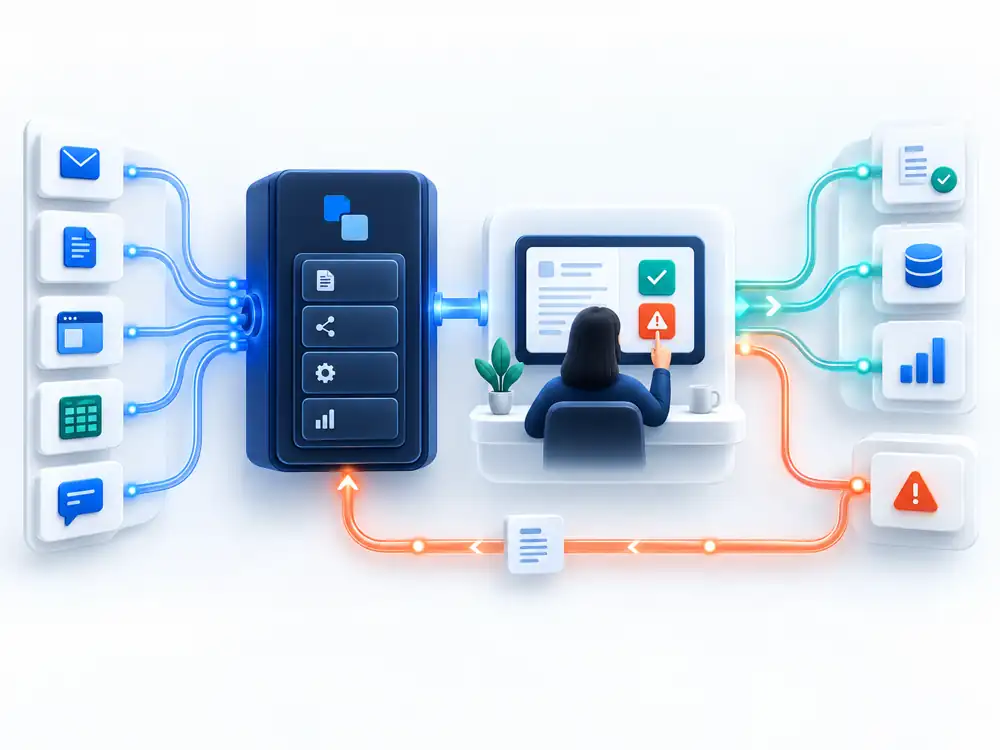
What is requested, followed up, received, passed on or reworked within the agreed scope.
One step waits for another, information arrives elsewhere, an approval has no owner.
The team confirms what is usable, what requires judgement and who remains responsible.
A rule, an owner and an expected result before choosing an automation.
Data to be read, exclusions, permissions, retention, providers and hosting are specified before any connection. The scope is documented before access is granted.
See the security framework →The goal of scoping is not an abstract score. It is to choose a workflow, clarify its exceptions, assign responsibilities and decide what should be automated, if anything.